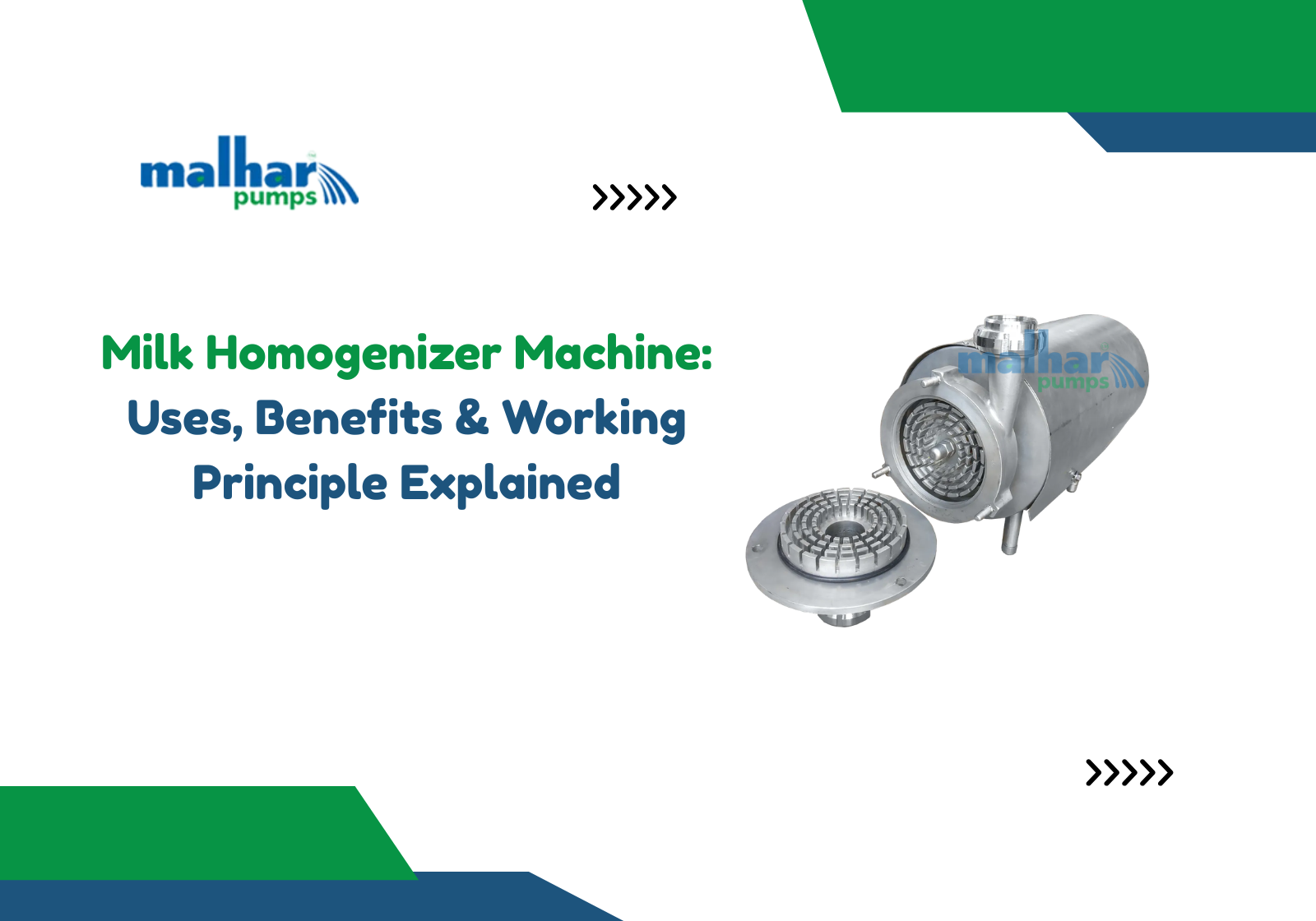


A Milk Homogenizer Machine breaks fat globules in milk into smaller, uniform sizes so the fat stays mixed instead of rising to the top as cream. Dairies run this step daily, right before packaging. This guide covers what the machine does, how it works, and where it fits on a dairy line.
What Is a Milk Homogenizer Machine?
A Milk Homogenizer Machine forces milk through a narrow valve at high pressure, and that pressure breaks fat globules into smaller, uniform particles.
Raw milk left alone separates. Cream rises to the top and settles within hours. Fine for a farm, not fine for packaged milk sitting on a shelf for days.
What changes once milk goes through this process:
- Fat globules shrink to a fraction of their original size
- Texture turns smooth and uniform throughout
- Cream separation stops happening in storage
- Shelf appearance stays consistent batch after batch
The fat stays suspended once it is broken down this way. It does not rise back up and form a layer again.
For efficient dairy processing, explore our homogenizer pump for dairy designed for consistent milk homogenization and reliable performance.
How Does a Milk Homogenizer Machine Work?
A Milk Homogenizer Machine pushes milk through a small valve gap under very high pressure, and that sudden pressure change is what splits the fat particles apart.
Milk enters the machine, gets pressurized by a pump, and then hits a narrow valve seat. The pressure drop there, combined with mechanical force, tears the fat globules apart. What comes out is already homogenized.
Working stages, roughly in order:
- Raw milk enters the intake chamber
- A pump raises pressure sharply
- Milk passes through the homogenizing valve
- Fat globules break apart under force
- Processed milk exits through the outlet
All of this happens in seconds, which is the only reason large dairies can push thousands of liters through without major delays.
Why Do Dairies Need a Milk Homogenizer Machine?
Dairies need a Milk Homogenizer Machine to keep texture uniform, extend shelf stability, and meet the packaging standards buyers expect.
Think about it from a retail shelf’s view. Milk that separates in the bottle looks off, and most customers assume something went wrong even when nothing has.
Reasons this equipment stays in the process:
- Consistent product appearance across every batch
- Better mouthfeel in milk, cream, and dairy drinks
- Longer visual shelf stability without separation
- Compliance with packaged food quality norms
Plants across India, including several in Rajasthan and Jaipur, treat this as a routine step before bottling milk, not an optional one.
What Are the Benefits of a Milk Homogenizer Machine?
A Milk Homogenizer Machine improves texture, extends usable shelf life, and cuts down waste caused by separation during storage and transport.
Uniform milk travels better. Temperature shifts and transport shocks do not cause visible separation the way they would with untreated milk, and that reduces returns.
Benefits worth listing out:
- Smoother texture in milk and dairy-based products
- Fewer spoilage complaints from retailers
- Better results in cheese, yogurt, and cream production
- Lower fat wastage during processing
- Easier digestion of homogenized milk for consumers
Skip this step, and a dairy plant usually deals with more returns and less customer trust over time.
Where Is a Homogenizer Pump For Dairy Used in the Process?
A Homogenizer Pump For Dairy comes into play right before packaging. It pushes milk through the homogenizing valve once pasteurization has already been completed.
There is a reason it goes after pasteurization and not before. Heat treatment takes care of the bacterial load first. Once that part is done, homogenizing the milk keeps it both safe to drink and consistent in texture before it ever reaches the filling line.
| Process Stage | Purpose | Equipment Used |
| Raw milk intake | Initial storage and filtering | Storage tanks, filters |
| Pasteurization | Kills harmful bacteria | Pasteurizer unit |
| Homogenization | Breaks down fat globules | Homogenizer Pump For Dairy |
| Packaging | Fills and seals product | Filling machine |
Notice the order here. Safety comes first, texture comes second, and packaging happens last. Change that sequence and the whole process loses its point.
How to Choose the Right Milk Homogenizer Machine?
Choosing the right Milk Homogenizer Machine depends on daily processing volume, required pressure, and the type of dairy product being made.
A small dairy handling a few hundred liters a day does not need the same setup as a large plant running continuous shifts. Pressure settings shift too, depending on the output type.
Worth checking before buying:
- Daily processing capacity needed
- Pressure range the machine can handle
- Compatibility with the existing pasteurization setup
- Ease of cleaning and maintenance
Get the sizing wrong, and you either pay for capacity you never use or push the machine past what it can comfortably handle.
Where to Buy a Reliable Milk Homogenizer Machine?
A reliable Milk Homogenizer Machine should come from a manufacturer that actually tests pressure consistency and backs the product with proper after-sales support.
Malhar Pump supplies a Homogenizer Pump For Dairy built for steady pressure output and daily industrial use, with a range covering different capacity needs.
Before placing any Milk Homogenizer Machine order, double-check that the pressure specifications match your product type and daily output.
Frequently Asked Questions
What does a Milk Homogenizer Machine actually do?
It breaks fat globules in milk into smaller particles so they stay mixed instead of separating.
Is a Milk Homogenizer Machine necessary for small dairies?
Yes, it helps even small operations by improving texture and cutting down separation complaints.
How long does a Milk Homogenizer Machine last?
Most run reliably for several years, provided they get regular maintenance.
Does homogenization affect the nutritional value of milk?
No. It changes fat particle size only and does not reduce the nutrients in milk.
Where does a Homogenizer Pump For Dairy fit in the process?
Right after pasteurization, just before the milk moves to packaging.
Follow Malhar Pump on Facebook and YouTube for the latest pump solutions, product updates, and industry insights.