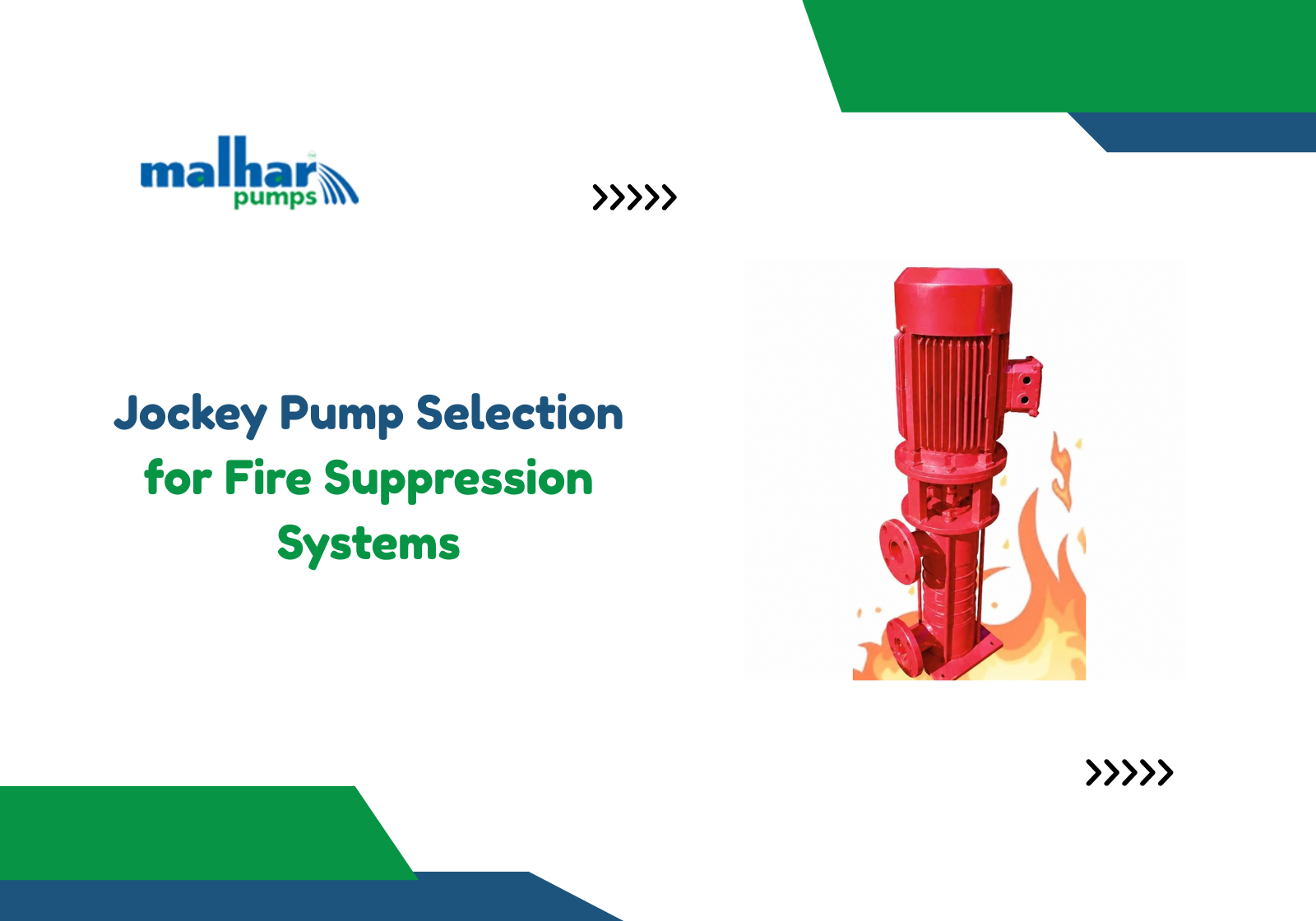


A Jockey Pump’s whole job is to keep the fire suppression piping pressurized between actual emergencies, so the main fire pump doesn’t end up cycling on for every small pressure dip caused by a minor leak. Picking the right one matters more than people usually think.
A pinhole leak develops in a sprinkler line over a quiet weekend. Without a properly sized Jockey Pump, the main fire pump would end up starting again and again just to make up for it, wearing itself down long before any real fire shows up.
What Is a Jockey Pump?
A Jockey Pump is a small auxiliary pump that holds steady pressure in a fire protection system so the larger main pump isn’t forced to start unnecessarily.
It works off its own controller, separate from the main fire pump, and switches on the moment system pressure dips just slightly below the set point. Once pressure climbs back to normal, it shuts off again, and this can happen several times a day depending on how tight the piping actually is.
- Holds steady pressure during everyday, no-fire conditions
- Keeps the main fire pump from starting too often
- Runs on a noticeably smaller motor than the primary pump
- Switches on and off automatically through its own pressure switch
Looking for a complete fire protection solution? Explore our Jockey Pumps designed to maintain system pressure and improve fire suppression reliability.
Why Does a Fire Suppression System Need a Jockey Pump?
Skip a Jockey Pump, and even small pressure losses from minor leaks or thermal expansion end up forcing the main fire pump to kick in, which adds unnecessary wear over time.
Most fire codes expect the main pump to fire up only during a genuine fire demand, not because of routine pressure swings. A Jockey Pump that’s working properly keeps that line clear, and that ends up extending the main pump’s life by quite a bit.
How Does a Jockey Pump Work?
A Jockey Pump senses a small drop in line pressure through its own switch, then runs just long enough to bring the pressure back to where it should sit.
Once that pressure is restored, the pump shuts off on its own, no manual involvement needed. This cycle can repeat dozens of times a day, quietly, without anyone noticing unless someone’s actually watching the system gauges.
What Factors Matter Most in Jockey Pump Selection?
Jockey Pump selection really comes down to matching capacity to the system’s actual leakage rate, not to whatever size the main fire pump happens to be.
Go too big with a Jockey Pump, and it ends up short-cycling constantly, which wears the motor and pressure switch out far sooner than it should.
What Are the Common Types of Jockey Pump Used in Fire Systems?
Most fire suppression setups end up using either a centrifugal Pump or a multistage vertical Jockey Pump, depending on what pressure the system actually needs.
- Centrifugal type, fine for moderate pressure requirements
- Multistage vertical type, useful where a stronger pressure boost is needed
- Both run on a relatively small electric motor
- The choice depends more on system height and pipe layout than overall building size
How to Size a Jockey Pump Correctly?
Sizing a Pump properly means working out expected leakage first, then setting pressure points that don’t clash with the main fire pump’s start pressure.
- Estimate the leakage rate based on pipe age and condition
- Set the cut-in pressure roughly 10 psi above the main pump’s start point
- Avoid going oversized, since that just leads to constant short-cycling
- Match motor rating to actual head and flow, not a rounded-up guess
Getting these numbers slightly wrong is one of the more common reasons fire systems run into cycling trouble within the first year of operation.
What Are the Maintenance Tips for a Jockey Pump?
A Pump doesn’t need heavy maintenance, but it does need consistent attention since it runs far more often than the main fire pump over any given month.
- Check pressure switch calibration every so often
- Watch for excessive cycling, which usually points to a leak somewhere in the line
- Make sure motor bearings aren’t overheating from frequent starts
- Test the controller whenever the main fire pump gets its scheduled inspection
Buildings around Ahmedabad needing help with Jockey Pump selection or broader fire pump system design can turn to Malhar Pump, where sizing decisions are based on actual site conditions instead of a standard catalogue number. More details sit at Malharpump.in.
FAQs
What does a Jockey Pump actually do?
It keeps fire line pressure steady, stopping the main pump from starting over minor pressure drops.
How is a Jockey Pump different from the main fire pump?
It’s much smaller, runs far more often, and only handles small pressure top-ups rather than real fire flow.
How often should a Jockey Pump cycle on?
Ideally, no more than about six times an hour under normal, leak-free conditions.
What happens if a Jockey Pump is too large?
It short-cycles too often, wearing down the motor and pressure switch much sooner than expected.
Where can Pump selection help be found in Ahmedabad?
Malhar Pump, listed at Malharpump.in, assists with sizing based on actual system requirements.
Check out our YouTube channel for Jockey Pump insights and connect with us on Facebook for the latest fire protection solutions and industry updates.