

Barrel pumps improve industrial fluid handling efficiency by moving liquid straight from drums to the point of use, cutting down manual pouring, spillage, and the time wasted on both. This guide looks at how barrel pumps improve industrial fluid handling efficiency on an actual shop floor, not just on paper.
Chemical units, food plants, workshops – most face the same recurring headache. Someone tilts a heavy drum, liquid sloshes out, and half the shift goes into cleanup instead of production. This is exactly where barrel pumps improve industrial fluid handling efficiency in a way that’s hard to miss once you’ve seen it in action.
What follows covers how these pumps work, where the efficiency actually comes from, which industries rely on them, and what to check before buying one.
Why Do Industries Need Barrel Pumps for Fluid Handling?
Because manual pouring is slow, messy, and different every single time someone does it. A barrel pump fixes that by drawing liquid directly through a tube inserted into the drum.
No tilting. No buckets. Transfer time often drops by half just from this one switch.
The reason barrel pumps improve industrial fluid handling efficiency so noticeably comes down to something simple: consistency. A person pouring from a drum varies their pace, their angle, how much they spill. A pump doesn’t.
Pharmaceutical plants, paint manufacturers, chemical processors – these industries depend on that exact consistency, both for safety and for keeping product quality steady batch after batch.
Looking for an easy and reliable way to transfer liquids? Explore our range of barrel pumps to find the right solution for your industrial fluid handling needs.
How Does a Barrel Pump Actually Work?
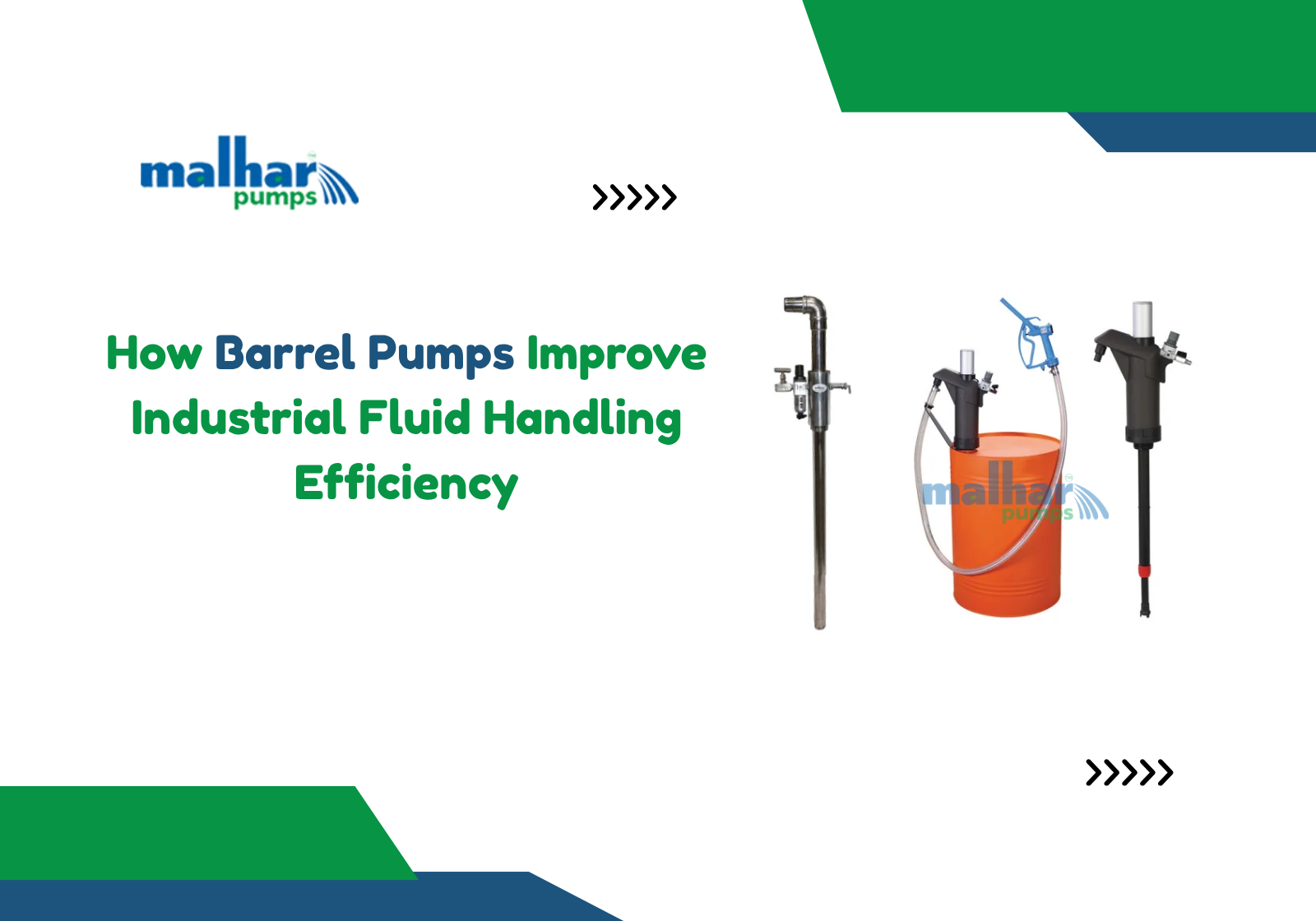
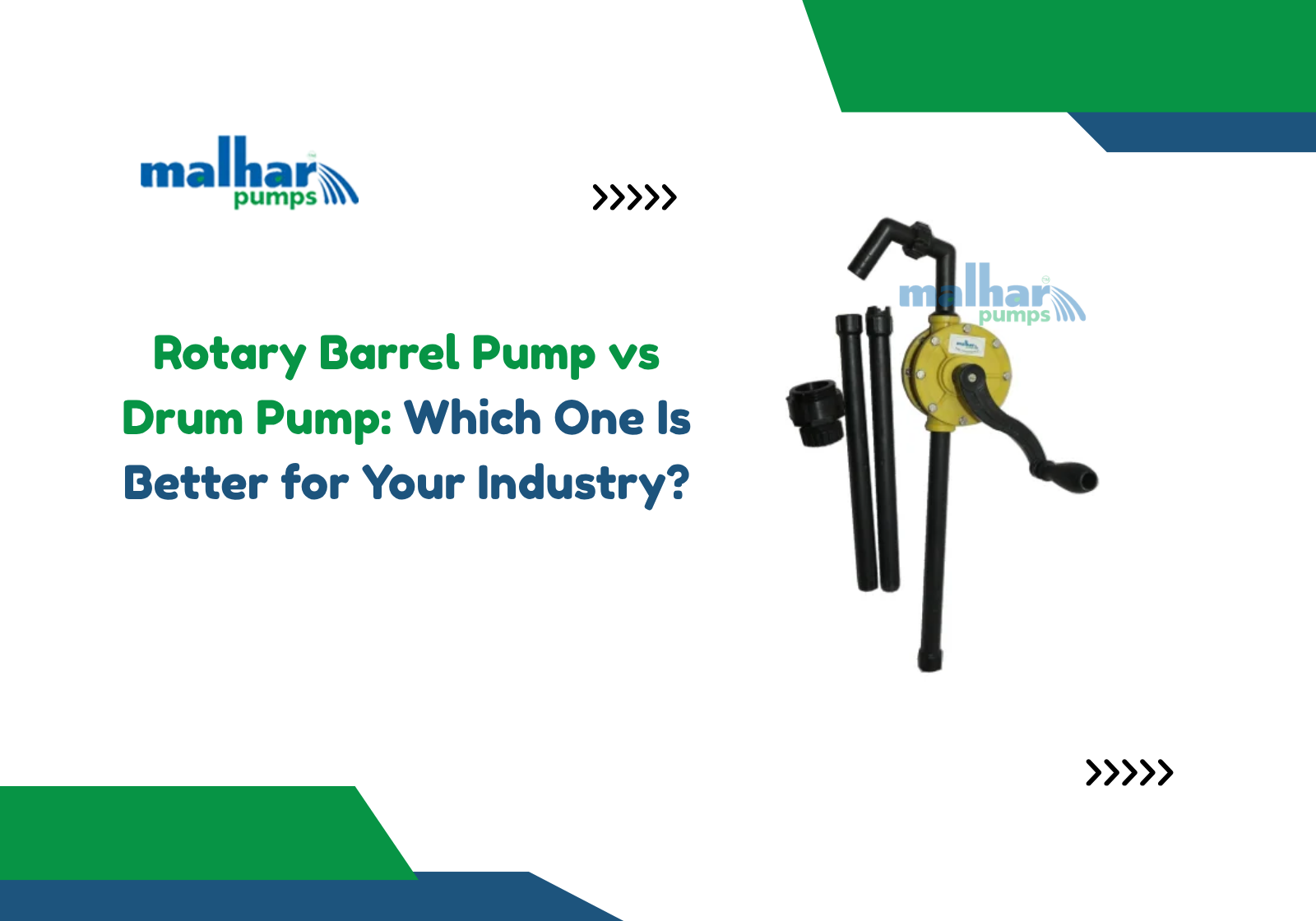
A tube goes into the drum. Suction pulls liquid up through it. It comes out through a nozzle at a controlled rate. That’s the basic mechanism behind every barrel pump.
Two designs dominate the market:
- Rotary barrel pump – a rotor pushes fluid through continuous rotation, works well for thinner liquids
- Piston barrel pump – uses a plunger action, handles thicker or more viscous fluids better
This is also part of why barrel pumps improve industrial fluid handling efficiency across such different liquid types. Thin solvents, thick oils, syrups – one design or the other usually fits.
Setup takes minutes. Insert the tube, attach a hose or nozzle, start dispensing.
Handling solvents in your industrial process? Get our solvent barrel pumps for efficient and reliable liquid transfer, and find the right pump for your application.
What Efficiency Gains Do Barrel Pumps Bring to Daily Operations?
Faster transfers, less waste, fewer injuries. Those three gains show up almost immediately after switching from manual methods to a barrel pump.
| Factor | Manual Transfer | Barrel Pump Transfer |
| Transfer speed | Slow, inconsistent | Fast, steady flow |
| Spillage risk | High | Low |
| Worker strain | High, requires lifting | Minimal |
| Liquid waste | Higher, residue left behind | Lower, near-complete drainage |
Worker fatigue drops too, since nobody is lifting or tilting heavy drums anymore. Product waste falls because a pump can draw liquid down closer to empty than manual pouring ever manages.
Put these together, and it becomes clear why barrel pumps improve industrial fluid handling efficiency isn’t just a marketing line, it shows up in the numbers at the end of a shift.
Which Industries Benefit Most from Barrel Pumps?
Chemical processing, food and beverage, pharmaceuticals, automotive lubricant handling. These four sectors move drums constantly, which makes the efficiency gain hard to ignore.
- Chemical plants transferring acids, solvents, and reagents safely
- Food manufacturers moving syrups, oils, and liquid concentrates
- Pharmaceutical units needing contamination-free liquid transfer
- Automotive workshops dispensing lubricants and coolants from bulk drums
Across every one of these, a barrel pump keeps proving the same point. Barrel pumps improve industrial fluid handling efficiency isn’t a claim that needs convincing anyone on the floor, it’s visible in how much faster the line moves.
How Do You Choose the Right Barrel Pump for Your Application?
Viscosity, drum size, chemical compatibility, and flow rate. Get these four right, and the pump choice mostly makes itself.
- Check the viscosity range the pump is actually rated for
- Confirm the pump’s wetted parts are compatible with your chemical
- Match tube length to drum height; otherwise, drainage stays incomplete
- Work out the flow rate your process actually needs per batch or shift
Skip this step, and even a good pump won’t deliver what it should. This is really where barrel pumps improve industrial fluid handling efficiency or fall short of it, depending entirely on whether the selection matched the application.
Need a safe and efficient solution for handling chemicals? Get our chemical barrel pumps designed for smooth, reliable fluid transfer across industrial applications.
For businesses looking at reliable options, Barrel Pump ranges are built to handle a wide variety of industrial liquids with steady output.
What Maintenance Keeps a Barrel Pump Running Efficiently?
Clean it, check the seals, store it properly. Three habits, and most barrel pump problems never happen in the first place.
- Flush the pump after each use, particularly with chemical liquids
- Check seals and gaskets now and then for wear or cracking
- Store the pump upright so residue doesn’t build up inside the tube
- Swap out worn parts before they cause contamination or leaks
Skip maintenance, and whatever efficiency the pump was giving you starts disappearing fairly quickly.
Frequently Asked Questions
What is a barrel pump used for?
A barrel pump transfers liquid directly from drums or containers to a discharge point, cutting down manual handling and spillage.
Can barrel pumps handle thick or viscous liquids?
Yes, piston-style barrel pumps are built specifically for thicker liquids like oils and syrups.
Are barrel pumps safe for chemical transfer?
Yes, as long as the pump’s wetted parts are chemically compatible with the liquid being moved.
How often should a barrel pump be cleaned?
Ideally after every use, especially when switching between different liquids or chemicals.
Do barrel pumps reduce product waste?
Yes, they draw liquid down closer to the bottom of the drum, leaving far less residue than manual pouring does.
Follow Malhar Pump on Facebook and YouTube for the latest pump solutions, product updates, and industry insights.