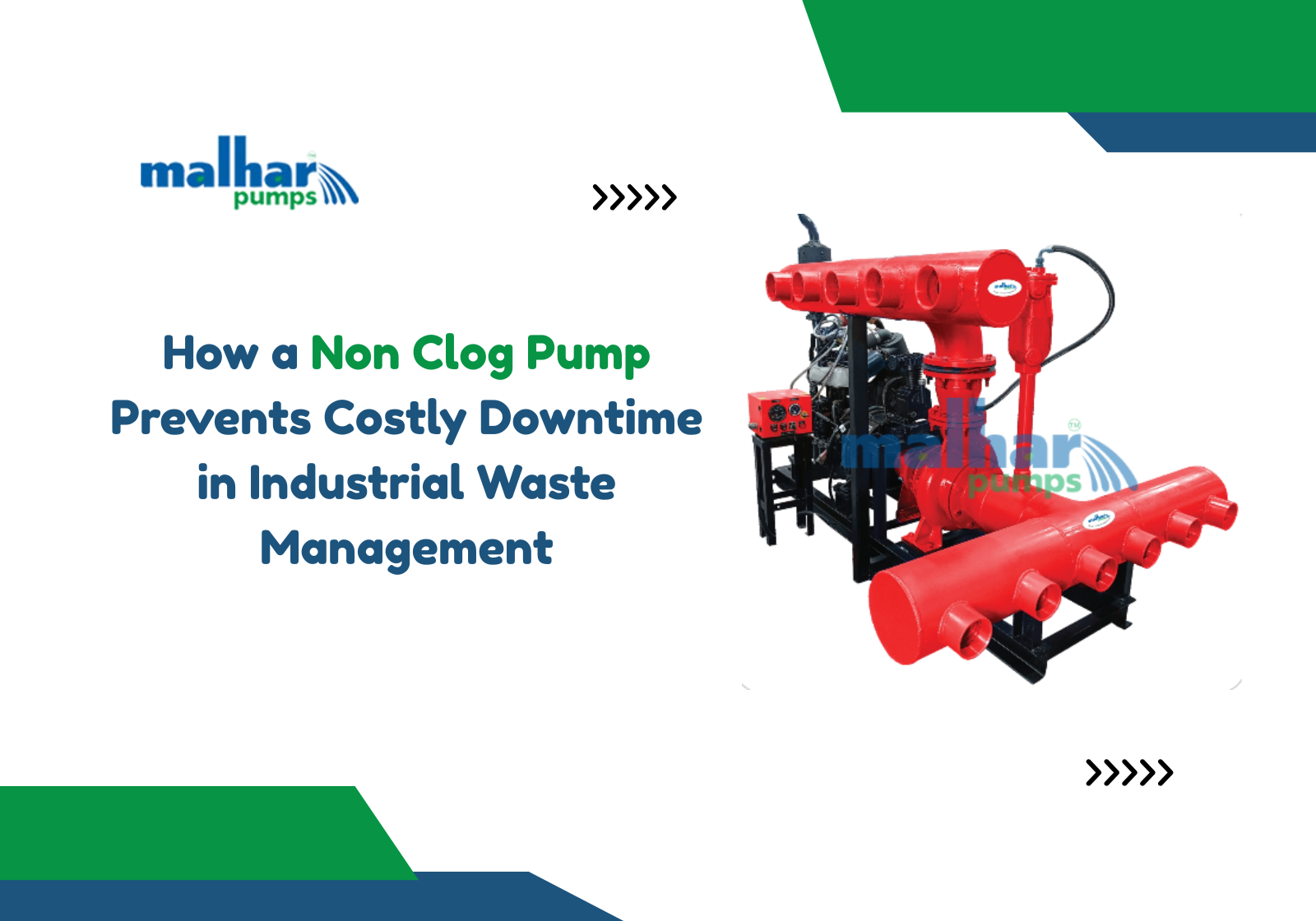


A non clog pump keeps solids, fibrous waste, and debris moving through the system instead of jamming the impeller, which is why plants rely on one to avoid unplanned shutdowns. Waste management sites deal with rags, sludge, and mixed solids daily, and a standard pump cannot handle that load without frequent blockages. This blog explains how a non clog pump works, where it fits into an industrial setup, and what to check before buying one.
What Is a Non Clog Pump?
It is a centrifugal pump built with a wider impeller passage and a rugged design, made specifically to move liquids carrying solids or stringy material without jamming.
Standard pumps use tight clearances that work fine for clean water but fail quickly with waste streams. This design gets around that problem in a few ways:
- A larger free passage through the impeller
- A vortex or channel design that pushes solids through instead of trapping them
- Heavy-duty seals built for abrasive material
- A casing shaped to resist wear from grit and debris
Fewer jams tend to mean fewer service calls, and most plants notice that within the first few months of switching over.
How Does a Non Clog Pump Prevent Downtime?
By letting solids pass straight through the impeller instead of building up and stalling the motor.
A clogged pump does more than stop pumping. It strains the motor, raises energy consumption, and often triggers a full shutdown while technicians clear the blockage. This pump avoids that chain of events because the impeller geometry is built for exactly this kind of load.
The downtime savings show up in a few places:
- Fewer emergency stops for manual declogging
- Lower motor strain, which extends the pump’s working life
- Steadier flow rates, which keep the rest of the treatment process on schedule
A plant running continuous shifts cannot afford repeated stoppages, and that is where a non clog pump earns its cost back.
Where Is a Non Clog Pump Used in Industrial Waste Management?
Mostly in sewage treatment plants, food processing units, and any facility handling slurry or fibrous waste on a daily basis.
Municipal treatment plants move raw sewage packed with rags, wipes, and grit, all of which would destroy a conventional pump within weeks. This pump handles that mix without the same wear pattern. Municipal corporations and industrial estates across India increasingly specify this pump type for new treatment installations.
Common applications include:
- Sewage lift stations
- Slaughterhouse and dairy waste handling
- Paper mill effluent transfer
- Chemical processing plants with suspended solids
What Features Should You Check in a Non Clog Pump?
Check the free passage size, impeller material, seal type, and motor rating before you commit to a specific model.
The free passage size determines how large a solid can pass through without jamming. A small free passage defeats the purpose, so match this figure to the debris size your site actually produces.
Two pumps can carry the same horsepower rating and still behave very differently once solids enter the mix, so compare these details across brands rather than going by output alone.
Which Non Clog Pump Type Fits Your Application?
That depends mostly on what your waste stream is carrying. Long fibrous material behaves very differently from heavy grit once it hits the impeller.
For stringy waste, a vortex-style pump tends to work better, since the impeller sits recessed from the flow path and rarely touches the solids directly. Heavier grit is a different story. There, a channel-style pump does the job, since the wider channels give abrasive particles room to pass through instead of grinding against the edge.
Malhar Pump stocks both configurations, so you are not forced into a generic model when your waste profile calls for something specific.
How Do You Maintain a Non Clog Pump for Long Life?
Inspect the impeller and seals on a set schedule, then flush the system every so often before buildup turns into a real blockage.
No pump runs forever on good design alone. Skip the checks, and even a well-built non-clog pump wears out faster than it should.
A few habits keep the pump running longer:
- Check impeller clearance every few months
- Swap out worn seals before they start leaking
- Watch motor temperature closely during peak load
- Keep a spare impeller nearby for quick swaps when something fails
For reliable handling of sewage, sludge, and solid-laden waste, explore Malhar Pump’s Non Clog Pump designed for demanding industrial applications.
Frequently Asked Questions
1. What makes a non clog pump different from a regular pump?
It has a wider impeller passage designed to pass solids without jamming, unlike standard pumps built for clean liquids.
2. Can a non clog pump handle sewage with rags and wipes?
Yes, that is one of its primary uses in municipal and industrial waste treatment.
3. How often should a non clog pump be serviced?
Most sites inspect seals and impellers every three to six months, depending on usage.
4. Does a non clog pump cost more than a standard pump?
Usually, yes, but the reduced downtime and repair cost often offset the higher upfront price.
5. Where can I buy a reliable non clog pump in India?
Malhar Pump supplies non clog pumps suited for industrial and municipal waste applications.
Follow Malhar Pump on Youtube and Facebook for the latest pump solutions, product updates, and industry insights.