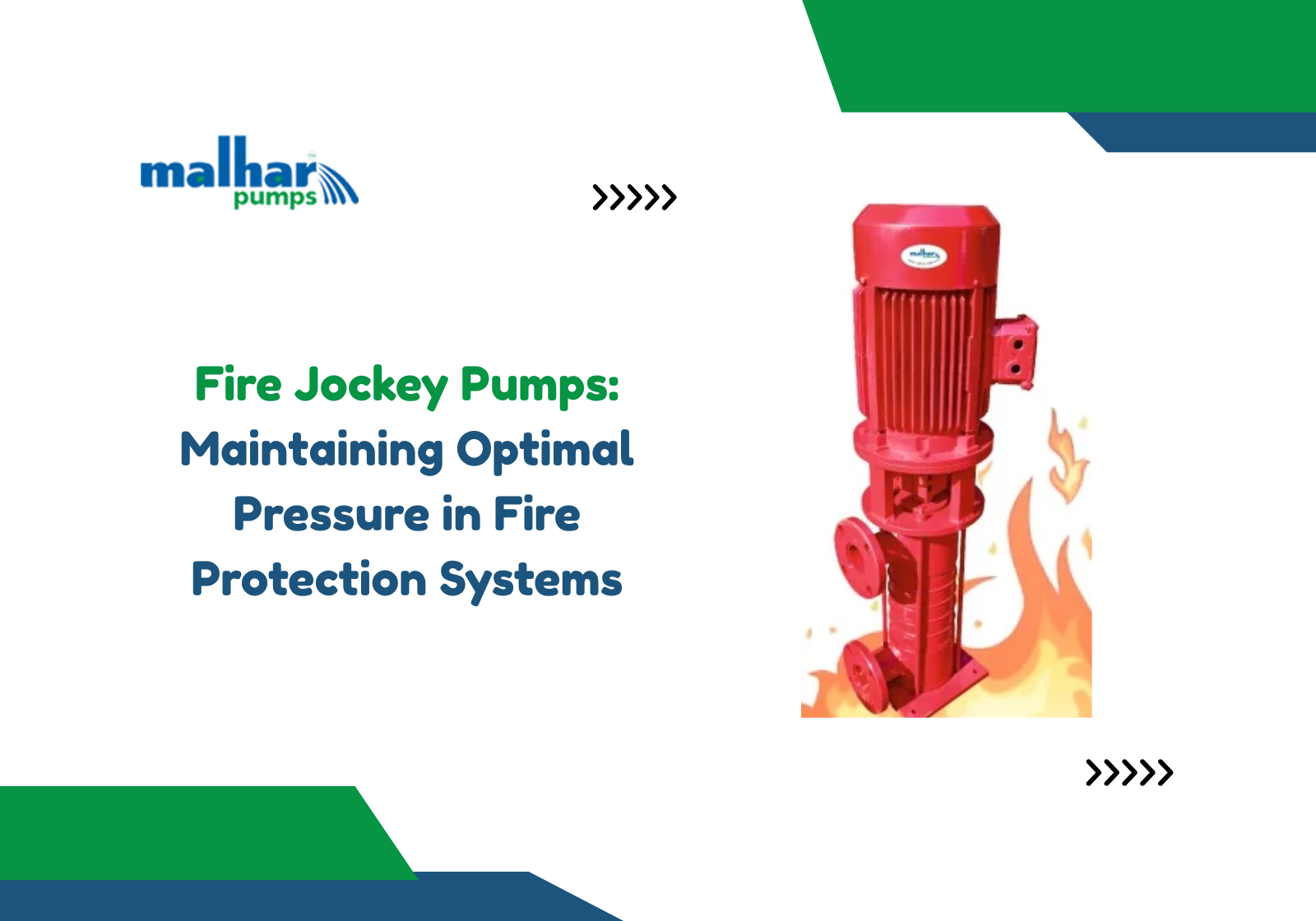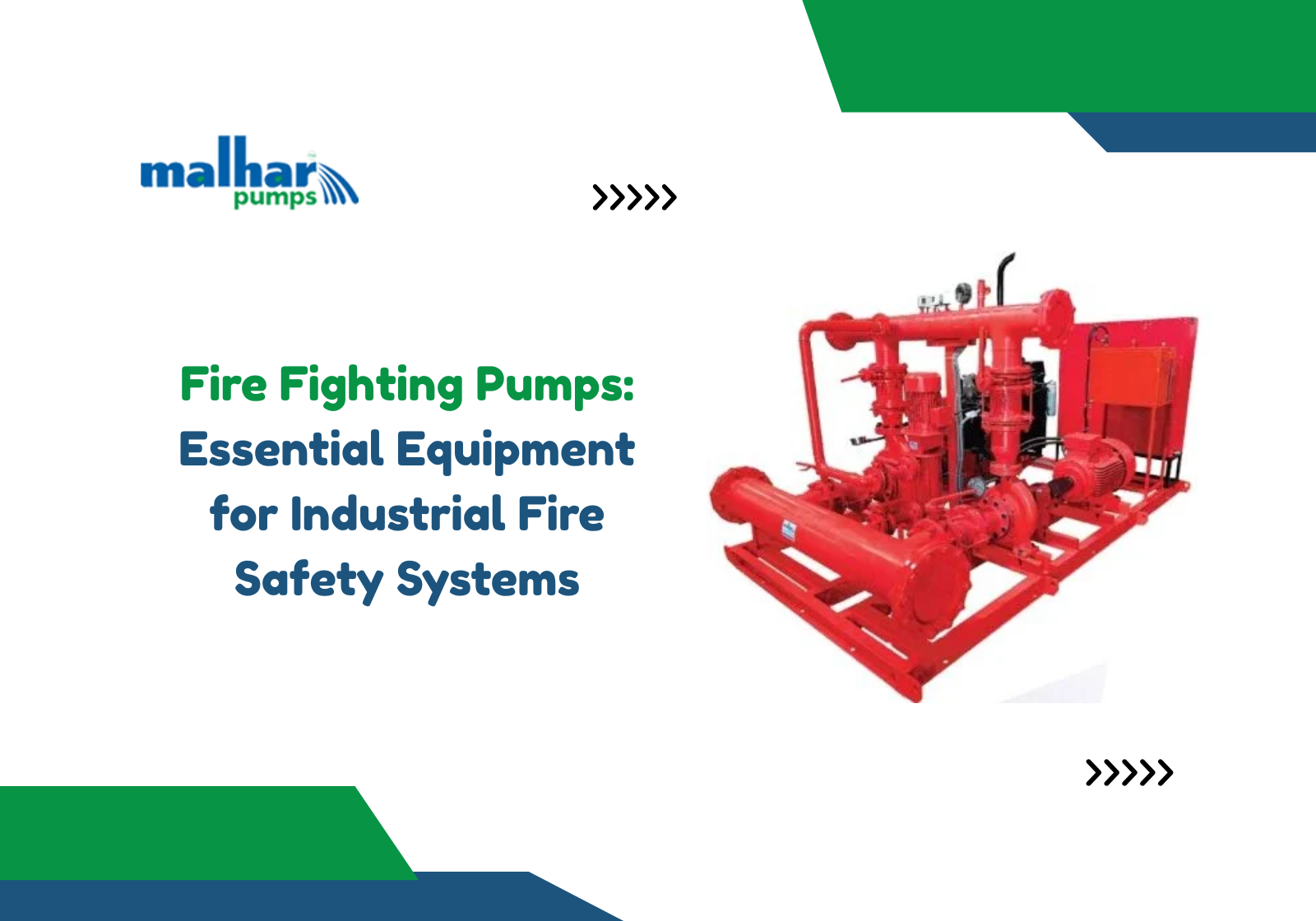

Let’s be honest, most people walk into a fire pump room and get confused instantly. There’s a huge fire pump, a diesel pump somewhere, and then… this small pump sitting quietly on the side. And naturally, people think, “What is this small pump doing?” That small guy is called the Jockey Pump, and it’s way more important than it looks.
By the way, if the firefighting system were a movie, the big fire pump is the hero, but the Jockey’s Pump is that behind-the-scenes team member who keeps everything running smoothly so the hero doesn’t get dragged into unnecessary scenes.
So, What Exactly Is a Jockey Pump?
In the simplest, least-technical way: A Jockey Pump maintains pressure inside the fire sprinkler or hydrant line. That’s literally its whole job.
Fire pipes keep losing tiny amounts of pressure throughout the day. It could be because of small leaks, temperature changes, or just normal wear-and-tear. Instead of making the main fire pump start again and again, the Jockey’s Pump quietly handles these tiny pressure drops.
It’s small, but it works more than any other pump in the system.
Why Do Fire Systems Even Need a Jockey Pump?
Let’s be real-nobody wants the fire pump screaming to life every time pressure drops slightly.
Imagine the chaos.
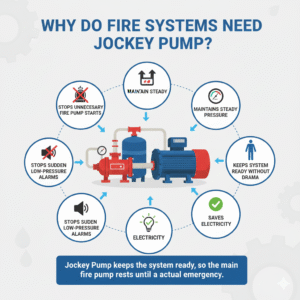
The Jockey Pump makes sure this doesn’t happen. It:
- stops unnecessary fire pump starts
- maintains steady pressure
- stops sudden low-pressure alarms
- saves electricity
- keeps the system ready without drama
In fact, if your Jockey Pump is working properly, your fire pump sits relaxed until there’s an actual emergency.
How Does a Jockey Pump Work? (Real Simple Explanation)
Fire systems work on fixed pressure levels. Let’s say your system is set at 10 bar. Now imagine pressure falls to 9.5 because of a small drip. The Jockey Pump gets a signal, starts instantly, and pushes it back to 10. Then it shuts off automatically.
- No noise
- No panic
- No unnecessary power consumption
Honestly, it behaves like a smart assistant that quietly cleans up small messes before the boss finds out.
The Real Purpose of a Jockey Pump
If we keep the technical jargon aside, the Jockey Pump is there to:
- hold the system pressure
- Stop the main pump from turning on for small drops
- ensure sprinklers respond instantly
- Make sure the entire firefighting network stays ready
- reduce the wear and tear of bigger pumps
It’s like the maintenance mode that keeps everything “just right” all the time.
Where Do We Usually See a Jockey Pump?
Pretty much in every building where firefighting lines exist.
- Malls
- Hospitals
- Factories
- Corporate offices
- Warehouses
- Hotels
If there’s a hydrant or sprinkler line, a Jockey Pump is almost always there, quietly doing its job.
A Raw, Real-Life Example
Let me put it in simple terms. Think of an overhead water tank. Even if no one uses water, the level drops a bit throughout the day because of heat and small leaks. You don’t switch on a huge motor every hour-you use a small top-up method.
Same logic.
The Jockey Pump is a small top-up system for your firefighting line.
But Why Is It So Small?
Because it’s designed only for pressure maintenance. Not for fighting fire. Not for running full flow. Just for topping up pressure.
Using a huge fire pump for this job would be like using a bulldozer to crush a mosquito.
Final Thoughts
Honestly, people underestimate the Jockey Pump because it doesn’t look powerful or impressive. But the whole firefighting system depends on it staying active. Without it, the fire pump would keep switching on, get damaged over time, waste electricity, and cause unnecessary noise.
So yeah, the Jockey Pump may be small, but it’s a big deal. It keeps the pressure stable, the system ready, and the building safe-all without anyone noticing. Buy now!
FAQs
- Why is a Jockey Pump needed?
To keep pressure steady, so the fire pump doesn’t start again and again. - Does it run the whole day?
No, it only runs when pressure drops slightly. - Is it part of every fire pump system?
Yes, any proper hydrant or sprinkler setup uses a Jockey Pump. - Why is it so much smaller than the main pump?
Because it handles tiny pressure corrections, not full fire flow. - Can the system work without one?
Technically, yes, but the fire pump will keep tripping unnecessarily.
Follow us on Facebook for more industrial insights and tech updates.
Subscribe to our YouTube channel for the latest industrial guides, tech insights, and how-to videos.