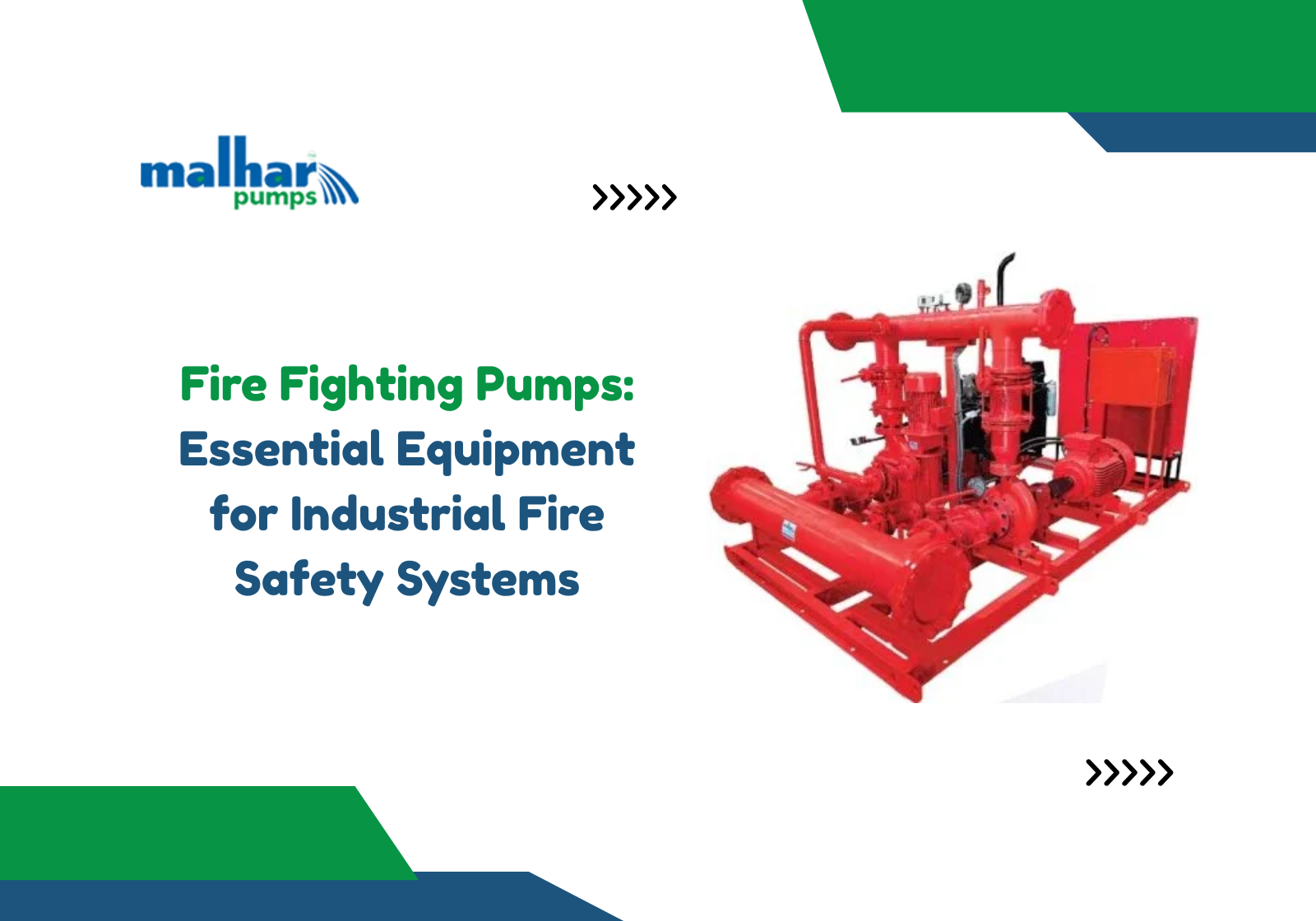

Fire emergencies look different depending on where they happen. A fire in a crowded city building is very different from a fire in a rural warehouse or a farmland storage area. Because of this difference, the design of Fire Fighting Engines also changes.
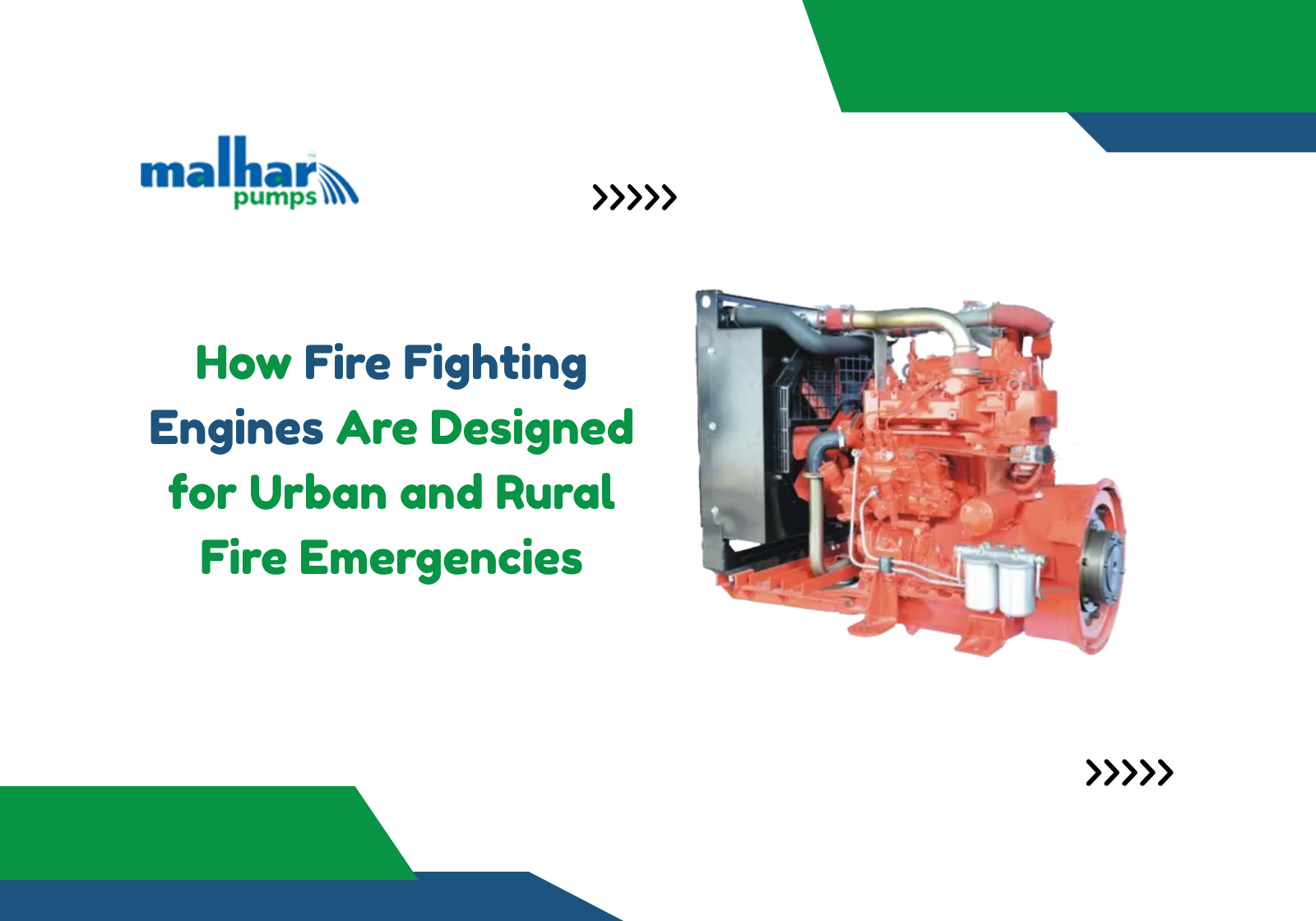
Years ago, fire vehicles were mostly basic trucks carrying water and hoses. But over time, engineers have started improving them. Today, Fire Fighting Engines are highly designed machines intended to respond quickly, perform well, and be reliable during emergencies.
The objective is simple. The fire brigade needs to reach the fire site quickly and control the fire before it spreads further.
But the requirement to reach a fire site in a city is totally different from the requirement to reach a fire site in a remote village. This is the reason why today’s Fire Fighting Engines are designed to have special features.
Why Fire Fighting Engines Need Different Designs
Cities and rural areas present completely different challenges for firefighters.
Urban areas usually have:
- Narrow roads
- Heavy traffic
- Tall buildings
- Crowded surroundings
Rural areas usually have:
- Long distances between locations
- Rough or uneven roads
- Fewer water sources
- Open land or storage facilities
These are the reasons why the manufacturers have designed the fire engines to fight both types of emergencies in a practical manner.
Design Features of the Fire Fighting Engine to Fight Urban Fire Emergencies
Urban areas require speed and quick movements. When a fire breaks out in an urban area, every minute counts. Hence, the fire engines used to fight fire emergencies in the city are designed to move quickly and to provide access to the equipment.
Compact Vehicle Structure
Urban streets can become congested quickly. Large vehicles may struggle to move through traffic or narrow lanes. For this reason, many Fire Fighting Engines used in cities have a compact structure. This allows the firefighters to get to the location faster, as well as get the vehicle closer to the building.
A smaller turning radius is also beneficial, as streets are often narrow.
High-Pressure Pump Systems
There are many fires in cities, which are mostly in buildings with many floors, offices, or apartments. To combat the situation, Fire Fighting Engines are provided with water pumps. This allows the water to be pushed through the hoses, which are used to get to the higher floors of the buildings.
Without the water pumps, it would be extremely difficult to control the fires in the buildings with many floors.
Organized Equipment Compartments
Urban emergencies require quick action. Firefighters cannot waste time searching for tools.
Because of this, modern Fire Fighting Engines include well-organized compartments where equipment is stored neatly. Common equipment includes:
- fire hoses
- breathing equipment
- rescue tools
- cutting devices
- protective gear
Everything is placed in a way that firefighters can access it immediately.
Communication Systems
During a city emergency, coordination between teams becomes very important.
Many Fire Fighting Engines are equipped with communication systems that connect firefighters with the control room and other rescue units. This helps the entire response team work together more efficiently.
Design Features for Rural Fire Emergencies
Unlike in urban areas that emphasize speed and quick movements, the design emphasizes strength and endurance in the case of the Fire Fighting Engines in the village or the countryside. The distance that the Fire Fighting Engines may be required to travel is long in the village or the countryside. The roads may also be rough. Therefore, the design emphasizes strength.
Larger Water Storage
Water hydrants are common in cities, but they are not always available in rural locations.
For this reason, rural Fire Fighting Engines often carry larger water tanks. This allows firefighters to start controlling the fire immediately after arriving.
The additional water capacity becomes very helpful in areas where water sources are limited.
Off-Road Capability
Rural roads are not always smooth. Some areas may have dirt roads, uneven surfaces, or agricultural paths.
In order to handle these situations, the Fire Fighting Engines designed for these situations are equipped with:
- Strong suspension systems
- Heavy-duty tires
- Higher ground clearance
These enable the vehicle to traverse the uneven surface safely.
Long Operation Time
In the case of a fire in a remote area, the fire station may be far from the emergency. After the firefighters reach the scene of the fire, they may have to work for a long time.
Therefore, rural Fire Fighting Engines usually carry additional hoses, equipment, and fuel capacity so that operations can continue without interruption.
Technology Improving Fire Fighting Engines
Technology has made a big difference in how Fire Fighting Engines perform today.
The modern technology also allows firefighters to perform their tasks faster and more accurately during an emergency. The technology that is being used in modern firetrucks includes:
High-capacity water pumps
- GPS navigation technology for quick route selection
- Thermal cameras for detecting fire sources
- LED lighting for night operations
- Advanced communication devices
Modern technology makes Fire Fighting Engines efficient and effective during critical situations.
Why Smart Design Matters
The design of Fire Fighting Engines is very important in helping firefighters control the fire as fast as possible. The design of a fire engine allows the firefighters to carry their equipment and start firefighting as fast as possible.
Urban emergencies require compact vehicles with strong pump systems. Rural emergencies demand durability, larger water capacity, and off-road capability.
Because of this, manufacturers continue improving Fire Fighting Engines so they can handle different environments and unpredictable fire situations.
Conclusion
Fire emergencies can happen anywhere, whether in busy cities or quiet rural regions. In order to deal with these situations in an effective manner, Fire Fighting Engines must be designed with flexibility and strength.
Urban fire engines are designed with a focus on speed, easy access to fire-fighting equipment, and high-pressure pumps for fire-fighting in tall buildings. On the other hand, rural fire engines are designed to emphasize ruggedness, large capacity water tanks, and the capacity to traverse rough surfaces.
With appropriate engineering skills and technology, Fire Fighting Engines are designed to be helpful for fire fighting operations.
FAQs
- What are Fire Fighting Engines used for?
They are used to transport fire fighting personnel and fire fighting equipment.
- Are Fire Fighting Engines the same everywhere?
No. Some are designed for cities, while some are designed for rural areas.
- Why do Fire Fighting Engines carry water tanks?
Water tanks allow firefighters to start firefighting immediately when water sources are not nearby.
- Can Fire Fighting Engines travel on rough roads?
Yes. Rural fire engines are designed with strong tires and suspension for rough terrain.
- Do Fire Fighting Engines use modern technology?
Yes. Many engines include GPS systems, thermal cameras, and advanced pumps to improve firefighting operations.
Follow us on Facebook for more industrial insights and tech updates.
Subscribe to our YouTube channel for the latest industrial guides, tech insights, and how-to videos.